
Bottom-up neuroscience
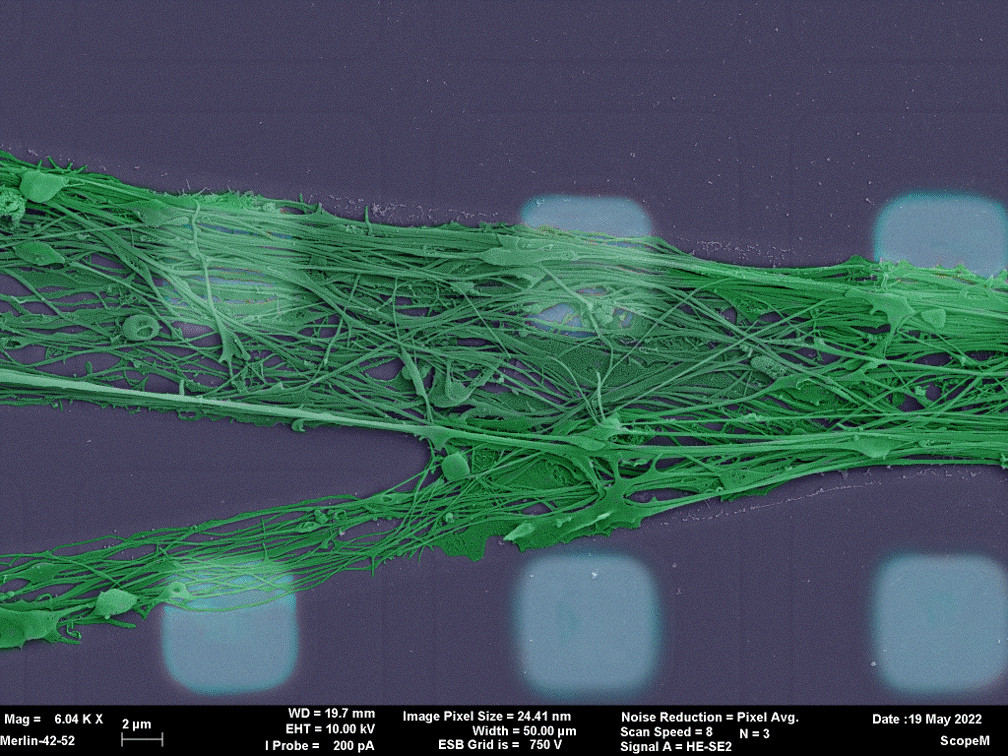
Understanding the brain is one of the grand challenges of the 21st century. At LBB we follow a bottom-up approach using our tools that allow for building networks of human iPSC-derived neurons with controlled topography on a chip. We can then interact with these networks using electrical stimulation and recording. These can be used for fundamental neuroscience, for disease modeling, and for biocomputation.
Projects
- Joël Küchler Hybrid intelligence
- Giulia Amos In vitro neuroscience
- Vaiva Vasiliauskaite Experimentally guided computational neuroscience
- Fariba Karimi Temporal interference stimulation in vitro
- Nicolai Winter-Hjelm In vitro model of Alzheimer's disease
- Josephine Löhle Infering network parameters from activity data
- Florian Willi Adaptive stimulation learning for biological neural networks
- Fiona Konnerth In vitro model of nociception using human iPSC-derived cells to enable screening drugs for chronic pain
- Nina Doorn In vitro brain circuits and computational models to study genetic brain disorders